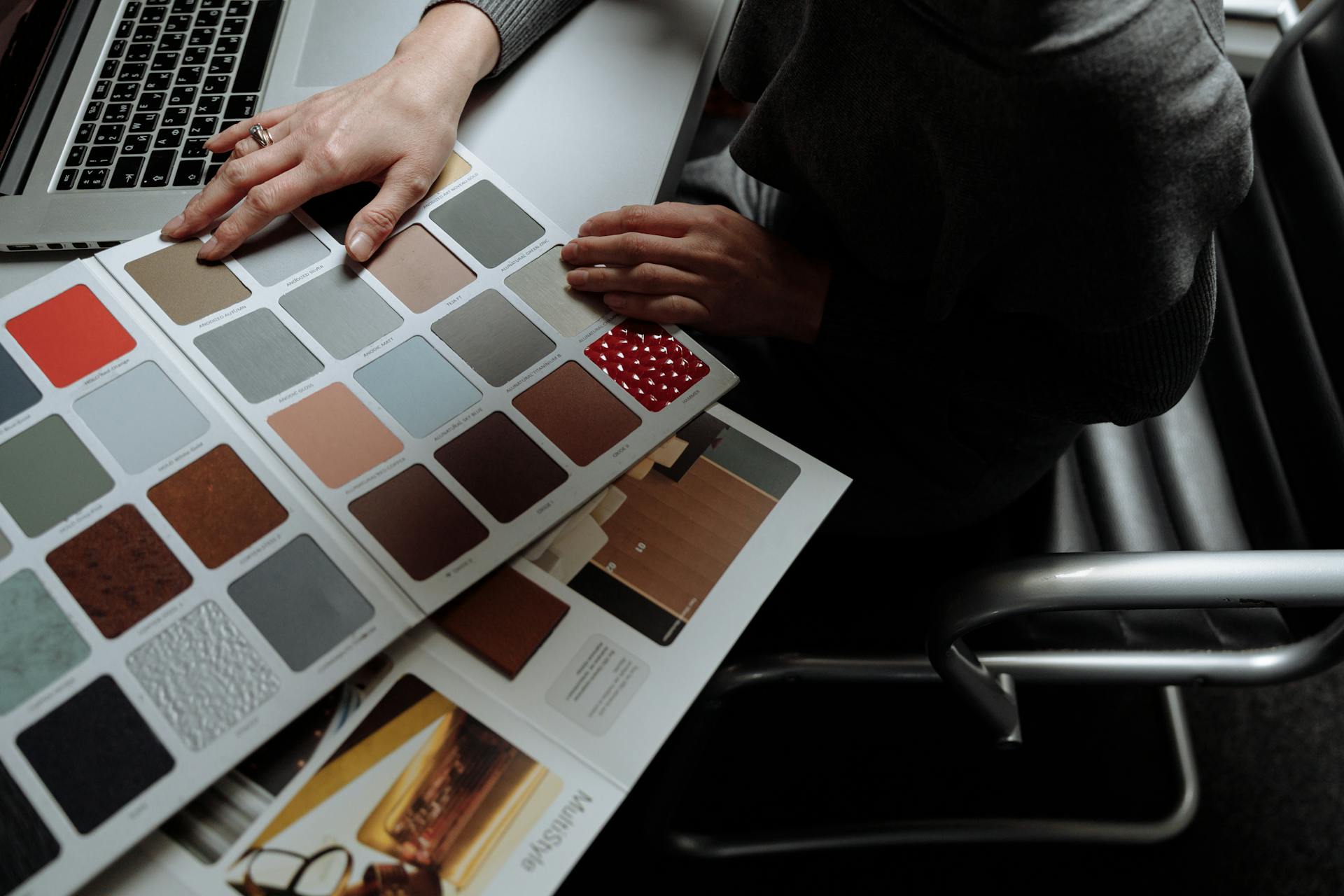
Why Every Business Needs a Signature Visual Language
Open Instagram. Scroll for thirty seconds. Now try to remember which brand posted what.
You probably can't. Most of them blur into the same beige palette, the same geometric sans serif, the same stock photo of a smiling team in a sunlit office. The brands you actually remember? They share something the rest don't. They have a signature visual language.
This isn't about having a nice logo. A logo is one element. A visual language is the whole system that makes your brand recognizable even when your logo isn't there.
What a Signature Visual Language Actually Is
A signature visual language is the consistent, distinctive way your brand looks and feels everywhere it shows up. Your website. Your packaging. Your ads. Your invoices. Even your error pages. It's the combination of choices about color, type, imagery, layout, and motion that someone could identify as yours with the logo cropped out.
Think about Mailchimp. You'd recognize their Cooper Black headlines and squiggly illustrations on a billboard with no logo on it. Or Liquid Death. Black metal typography on a water can, sitting in an aisle full of pastel wellness brands. That kind of instant recognition isn't an accident. It's a system.
Visual Language vs. Brand Guidelines vs. Logo
People mix these up constantly.
A logo is a mark. Brand guidelines are a document that says "use Helvetica, here are our colors." A visual language is the lived expression of those rules. It's the way they combine to produce a recognizable point of view. You can follow brand guidelines perfectly and still produce work that looks like everyone else's. A visual language has a voice.
The Real Cost of Looking Like Everyone Else
When your visuals are generic, you pay in three currencies.
You pay in attention. Customers scroll past. The average person sees somewhere between 4,000 and 10,000 brand impressions a day. The forgettable ones don't register at all.
You pay in trust. Inconsistent or generic visuals read as small, new, or unsure. A signature look signals you've thought about the details, which suggests you've thought about the product too.
You pay in marketing efficiency. Brands with strong visual identities need fewer impressions to be remembered. That means lower customer acquisition costs, higher organic recall, and ads that work harder. A 2021 Lucidpress report found consistent brand presentation increased revenue by an average of 33%. The math is brutal if you ignore it.
A Quick Example
A small skincare brand I know launched with the standard playbook. Serif logo, off white background, minimalist product shots, beige and sage palette. Six months in, the founders couldn't figure out why their ads weren't converting. The product was good. The price was right.
The problem? They looked exactly like 200 other skincare brands. When they rebuilt around a signature look (saturated 70s color blocking, hand set type, deliberately imperfect product photography), their click through rate roughly doubled in the next quarter. Same product. Different visual language.
The Building Blocks of a Signature Visual Language
A visual language isn't one thing. It's a stack of decisions that build on each other.
Color
Most brands pick two or three colors and stop there. Distinctive brands build a full palette. Primaries, secondaries, accents, and the unexpected ones that make the system feel alive. Headspace's mango orange is recognizable in a thumbnail. Cash App's neon green doesn't apologize for being loud. Pick colors that signal your category of one, not your category.
Typography
Type is where most brands play it safest and pay for it most. Defaulting to Inter or Helvetica makes you look like every Y Combinator startup from 2019. Strong visual languages either commission custom type, license something with personality (think Recoleta, Söhne, or Migra), or pair a familiar workhorse with an expressive display face that does the heavy lifting.
Photography
Photography is where most brands quietly give up. They license stock, run it through the same Lightroom preset everyone else uses, and wonder why their feed looks generic. Brands with a real visual language commit to a photographic point of view. A specific lens, a specific lighting setup, a specific way of styling product. When customers see one of your photos out of context, they should know it's yours.
Video
Video is the front door of most brands now. The way your product films, the pacing of your edits, the color grade you favor, the kind of music you license, all of it is part of the visual language. A scrappy iPhone vertical can feel just as intentional as a polished cinematic spot, but only if it's consistent. Brands that treat video as a one off campaign tax instead of a system always look fragmented.
Illustration and Graphic Design
If every competitor in your category leans on photography, illustration becomes a fast way to stand out. If everyone illustrates, swing the other way. The goal isn't novelty for its own sake. It's a consistent visual register that nobody else owns. Mailchimp's illustrations didn't just decorate the brand. They became the brand.
Layout and Composition
How you arrange elements is as much a fingerprint as what those elements are. Asymmetric grids, generous white space, dense editorial layouts, brutalist no grid chaos. These are all valid choices, and each one communicates something different. Pick one and commit.
Motion and Interaction
On the web, motion is part of your visual language. The way buttons respond, how transitions feel, the easing curves you use. Stripe's micro interactions and gradient animations are as recognizable as their logo. If you're shipping a digital product, motion isn't optional. It's a core component.
How to Build a Signature Visual Language
You don't need a Pentagram engagement to do this well. You need a clear process and people who can actually execute across every surface.
Step 1: Audit Your Category
Pull screenshots of every direct competitor's homepage, social feed, and packaging. Lay them out in a grid. Now squint. What's the dominant palette? The default type pairing? The reflexive imagery style? That's the visual cliché of your industry. Your job is to identify it and deliberately not be it.
Step 2: Define Your Visual Tension
Every memorable brand sits at the intersection of two things that don't usually go together. Liquid Death is canned water plus heavy metal. Glossier is serious skincare plus Tumblr girlhood. Oatly is oat milk plus 90s zine design. Find the two unrelated worlds your brand can credibly bridge, and let that tension drive your aesthetic decisions.
Step 3: Build the System, Not Just the Hero Asset
Don't design a beautiful homepage and stop. Design the error states, the receipt emails, the LinkedIn ads, the packaging, the slide template your sales team will actually use. A visual language only exists if it shows up in the unsexy places. That's where consistency is won or lost.
Step 4: Document Lightly, Enforce Ruthlessly
You don't need a 100 page brand book. You need a 10 page document anyone on your team can use to ship on brand work without asking design. Then someone, usually a founder, head of marketing, or creative lead, has to actually defend it. Most brand languages don't die from bad strategy. They die from a thousand small concessions.
Step 5: Get One Team to Run the Whole System
This is where most companies stall. A signature visual language means video, photography, graphic design, and campaign work all need to speak the same dialect. Hire one studio for video, another for photo, a freelancer for the deck, and an agency for the campaign, and you'll spend the next year fighting drift between four different versions of your brand.
A1 Studios exists to solve exactly this. We do video production, photography, graphic design, and campaign development under one roof. Same team, same point of view, same visual language across every channel. The brand you ship on Tuesday matches the one you ship on Friday because the same people built both.
Common Mistakes That Kill Visual Identity
A few patterns kill visual languages over and over.
Following trends instead of setting them. If your brand looks like the Pinterest board of the moment, it'll look dated by next year. Trends are a tax.
Confusing minimalism with neutrality. Stripped back design can be incredibly distinctive (see Aesop, Apple, Off White). But minimalism without a point of view is just blandness with better kerning.
Letting every team make their own choices. Sales decks drift. Social posts drift. The careers page drifts. Within 18 months you have a brand wearing five different costumes. One person, or one studio, needs to own visual consistency from start to finish.
Rebranding too soon. New marketing leaders love rebrands. But a brand only starts compounding once it's been consistent for years. If you're rebranding every 24 months, you're paying the setup cost over and over and never collecting the recognition dividend.
FAQ
How long does it take to build a signature visual language?
The initial system can be built in 6 to 12 weeks with a focused team. The recognition you're trying to build takes years of consistent application after that. Plan for the long game.
How is a visual language different from a brand?
A brand is everything someone thinks and feels about your company. A visual language is the visual layer of that. The part you can actually see. Strong visual language reinforces the brand. It doesn't replace it.
Can a small business afford this?
Yes, and small businesses arguably need it more. You can't outspend bigger competitors on impressions, so each impression has to do more work. A distinctive visual language is one of the highest leverage investments a small business can make.
What's the difference between a style guide and a visual language?
A style guide documents rules. A visual language is what those rules produce when applied with taste and consistency. You can hand two designers the same style guide and get very different results. The missing ingredient is judgment, which lives in the team applying the rules.
Should I hire one studio or piece together specialists?
If you piece it together, the pieces won't match. Your video looks like one brand, your photography like another, your campaign like a third. Hiring a single team that handles video, photography, graphic design, and campaign development in one place is how you end up with a real visual language instead of a Frankenstein. That's the gap A1 Studios fills.
How do I know if my visual language is working?
Two signals. Customers can describe your brand's look without prompting ("you're the colorful one with the squiggles"), and your team can ship new assets quickly without every decision turning into a debate. If both are true, the system is working.
What to Do Next
Pull up your homepage, your last five Instagram posts, your most recent sales deck, and your packaging. Put them on one screen. If you covered the logos, would anyone know these came from the same company?
If the answer is no, you don't have a visual language yet. You just have visuals.
The fastest way to fix that is to stop scattering the work across freelancers and one off vendors. Bring video, photography, graphic design, and campaign development under one team that can build the system and ship it consistently across every surface.
That's what A1 Studios does. If you're ready to stop blending in, get in touch and let's build something people actually remember.